Six months of work on your offer. A website, a logo, a course on how to sell, whole evenings gone. The result? Two sales, one of them to your cousin.
Stop now? Out of the question, you have already put far too much time and money into it!
That reflex has a name, the sunk cost fallacy. You keep going with a project because you have already invested in it. Yet what you spent is gone, whether you stop or not.
When you work for yourself, it costs more than anywhere else, because nobody is there to say stop. That does not mean giving up at the first setback: sometimes, carrying on is the right call.
So let's look at what it looks like when you work alone, what the research really says, and how to tell persistence from stubbornness.
What does the sunk cost fallacy look like when you work alone?
It rarely takes the shape of a ruinous project. It slips into small decisions, made "so all that work was not for nothing":
- You hold on to an offer that does not sell, and rebuild its website a third time instead of testing another one;
- You keep a client who costs you more than they bring in, because it took you weeks to land them;
- You keep posting on a social network that brings you no clients, because you already have a small audience there;
- You force yourself to use an annual subscription you have already paid for, when another tool would save you time.
Every one of these decisions looks backwards. None of them asks the only useful question, which is what the next step will bring you.
I once kept an email marketing tool that was far too expensive for months, for one reason only: a whole weekend spent sorting my contacts into it. The day I switched, my main regret was not doing it sooner 🥲
Where does the sunk cost fallacy come from?
A sunk cost is money, time or effort already spent. No decision will ever give it back. The hours you put into your website are part of it.
Logically, a decision should only look at what lies ahead. Psychologists Hal Arkes and Catherine Blumer showed in 1985 that we often do the opposite, in a paper that became the reference on the subject.
At the Ohio University theatre, some season subscribers had been given a discount drawn at random. Those who had paid full price went to more plays over the following six months. According to the two researchers, what we hate most is looking wasteful.
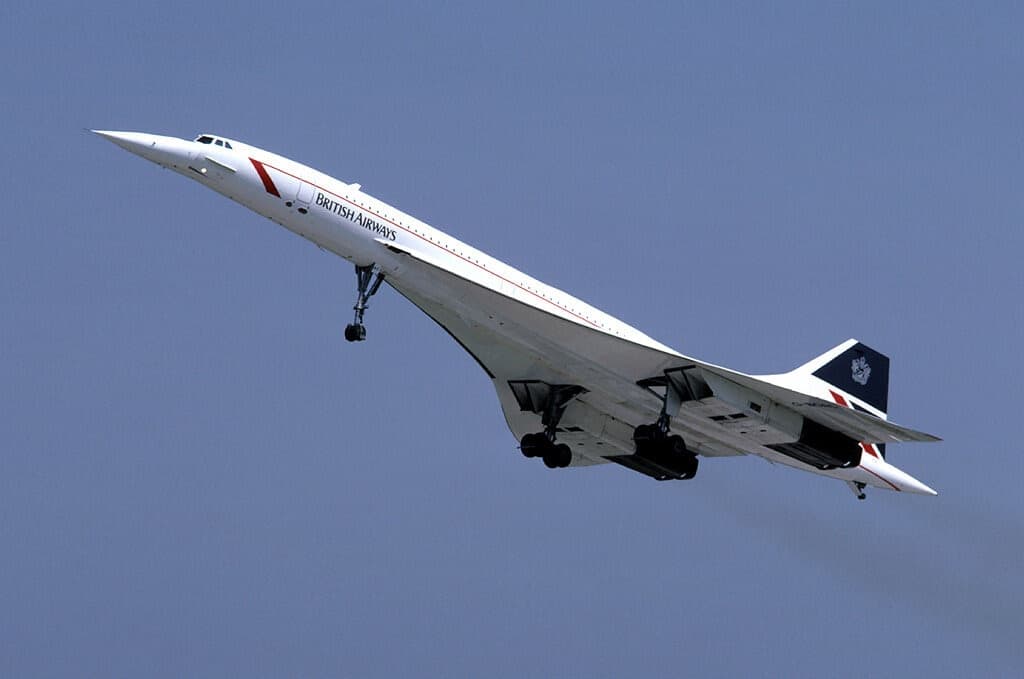
It is also called the Concorde fallacy, an example taken up by Hal Arkes and Peter Ayton in a 1999 review. France and the United Kingdom kept funding the supersonic jet when its profitability already looked doubtful.
Prestige and politics weighed on that choice. But so did the argument about money already invested, and that is what gave the trap its name.
Is the sunk cost fallacy really proven?
Many studies on the subject rely on questionnaires, where people choose without risking anything. In 2021, three economists, David Ronayne, Daniel Sgroi and Anthony Tuckwell, put real money on the table.
Their participants earned a lottery ticket by counting letters in texts, one minute per text. That ticket gave a one in ten chance of winning $10. They were then offered a free swap for a ticket with a one in five chance.
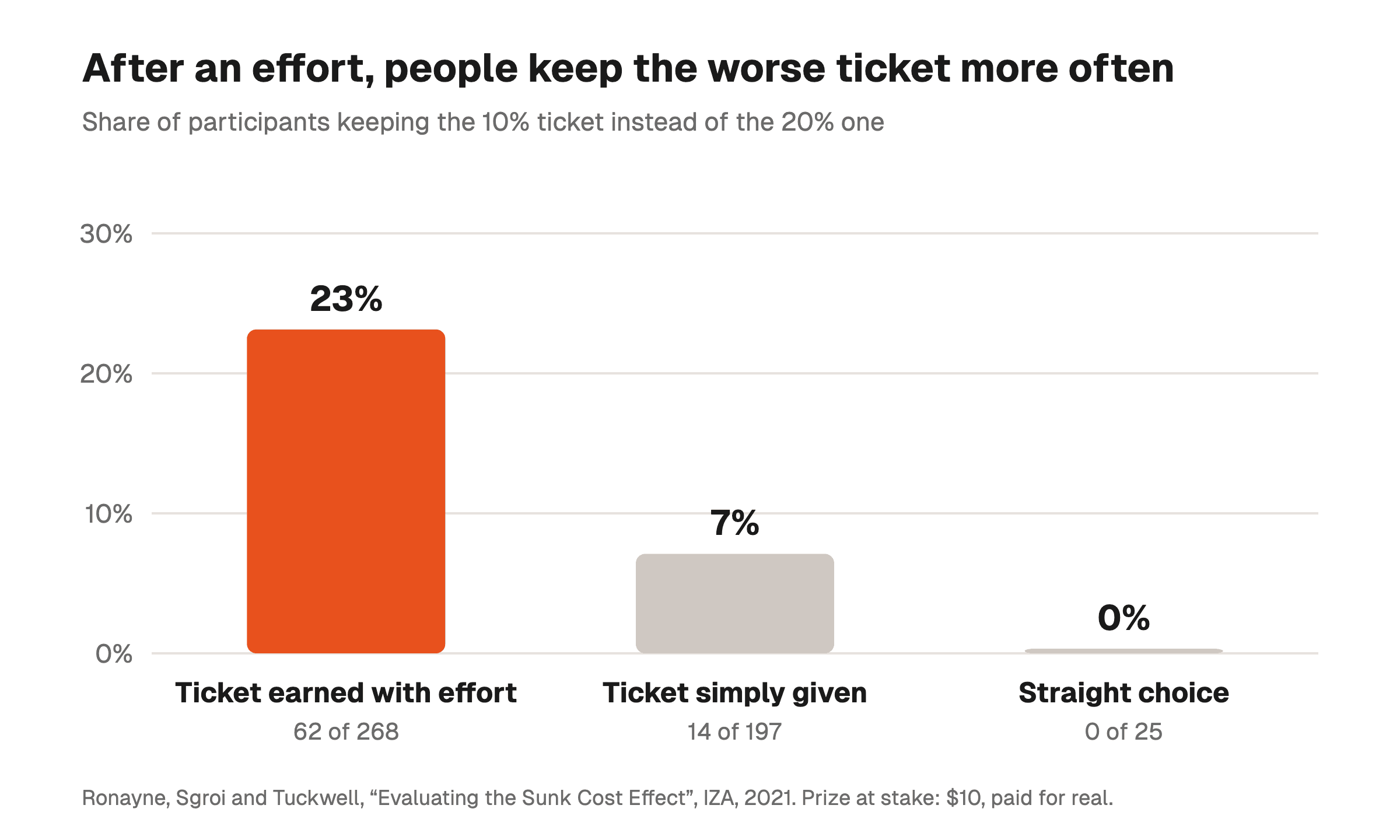
The result: 23% kept the ticket they had earned, or 62 people out of 268. Among those who had received the same ticket without any effort, only 7% did. Faced with a straight choice between the two tickets, nobody picked the worse one.
Nobody had paid anything. A few minutes of work were enough to make people prefer a one in ten chance to a one in five chance. The time you spend on an offer is enough to get you attached to it, without spending a single euro.
The effect is real, but its size varies a lot from one study to the next. A meta-analysis of 98 measurements (a study that pools the results of many others), published in 2014, rates it as moderate. Older people fall for it less than younger ones.
In 2025, an experiment with 1,806 people put a number on it. Paying $2 more for a 14-minute task made people stay 1.3 minutes longer, on average.
And according to another 2025 study, someone who falls into the trap in one scenario does not necessarily fall into it in another, even a very similar one. Nothing stops you from being clear-headed with your money and stubborn with your time.
Why do you dig in more easily when you are self-employed?
In a company, a manager or a budget eventually cuts a project that is not working. When you work for yourself, that person is you.
And you are badly placed to do it. Arkes and Blumer spotted a second effect: people who had invested in a project believed it was closer to success. Those who came to it without having put anything in rated it lower.
The more you have put into your offer, the more you believe in it. Two other things make the trap worse when you work alone:
- Stopping feels like admitting failure, especially in front of the people who warned you;
- Your hours never show up on an invoice, so one more week looks free.
Persistence or stubbornness: how do you tell the difference?
Giving up too early is a mistake too. An offer can take months to find its first clients. And the urge to drop everything the first time a prospect goes quiet sometimes comes from impostor syndrome rather than from the numbers.
To decide, ask yourself a single question. If you came across this project today, without having put anything into it, would you start it? Let's call it the blank page question.
If the answer is yes, carry on. If it is no, the only thing holding you back is what you have already spent. Here are a few things people often tell themselves, with what they usually hide.
| What you tell yourself | What it probably is | What to do |
|---|---|---|
| "I've invested too much to stop now." | The fallacy, almost always | Ask the blank page question |
| "One more version of the website and it will take off." | Often the fallacy | Show the offer to real clients before changing anything |
| "Sales are going up, just slowly." | Persistence | Carry on, with a review date |
| "My subscription is paid until June." | The fallacy | Pick the tool that serves you best, the money is gone either way |
| "My clients come back and recommend me." | A signal worth following | Carry on, even if the start was expensive |
How do you stop the past from deciding for you?
Set your stopping criteria before you start
The best time to decide when to stop is before you have invested anything. Write your conditions down in black and white when you launch an offer.
For example, "if my turnover has not reached €1,000 by 31 March, I change my offer or my target". On that day, you reread a decision made with a cool head instead of bargaining with yourself.
Work out what one more week costs
What matters is what the next step will cost you. Every week spent on an offer that does not sell is a week you do not spend on another one, or with a paying client. Economists call this the opportunity cost.
Our How much to charge calculator, built on French rules, works out your day rate from what you want to earn. Multiply it by the days you still plan to give the project: that is the real price of carrying on.
Ask someone who has invested nothing
A friend or another freelancer, it does not matter which. They have not spent a single weekend on your project, and they judge its chances less kindly than you do.
Ask them the blank page question, and let them finish before you defend your offer 😉
Keep what can be recovered
Dropping an offer does not take you back to zero. Your skills, your contacts and what you know about your clients come with you to the next one.
Often, changing the target or the promise is enough. To start again from real demand, read our article on how to find what to sell when you go self-employed.
To begin, take the project that keeps you busiest and ask it the blank page question. If the answer is yes, go for it!
Frequently asked questions
What is the sunk cost fallacy?
It is the tendency to keep going with a project because you have already put time, money or effort into it, even when the outlook is poor.
Those resources are lost whatever you decide. Only future costs and gains should count in the decision.
Why is it called the "Concorde fallacy"?
France and the United Kingdom kept funding Concorde when its profitability already looked doubtful, partly so as not to lose the money already invested.
Prestige and politics also played a part. The name stuck as a label for this trap.
Is the sunk cost fallacy scientifically proven?
Yes. In a 2021 experiment with real money, 23% of participants kept a worse lottery ticket when they had earned it through effort. Only 7% did when they had simply been given it.
A meta-analysis of 98 measurements, published in 2014, confirms the effect, with a moderate size.
How do you know whether to stop a project or keep going?
Ask yourself whether you would start this project today, from scratch. If so, carry on.
If not, the only thing holding you back is what you have already spent. A date and a figure set in advance also help you review it with a cool head.
How do you avoid the sunk cost fallacy?
Decide on your stopping criteria before you start, for example a turnover figure to reach by a given date.
Also work out what each extra week costs you, and ask for the opinion of someone who has invested nothing in the project.