Monday morning. Following up with that prospect has been on your list for three weeks.
You tidied your desk, changed the colours on your website and watched a video about productivity. The follow-up is still waiting.
Procrastination means putting off a task while knowing full well that the delay will cost you. It is not laziness: it is first and foremost a way of escaping an unpleasant emotion that the task stirs up.
When you work for yourself, it costs more. Nobody sets you a deadline before the client's or the tax office's, and the tasks you put off are often the ones that bring in money.
Let's look at why we procrastinate and why it gets worse when you work alone. Then, how to get back to work without a boss behind you, even if you think you are "just like that".
If it isn't laziness, what is it?
Look at your Monday morning. You didn't stay in bed. You tidied, tinkered, learned. Procrastinators are often very busy, just not with the right task.
Canadian psychologist Tim Pychyl, of Carleton University, has studied the question for years. With Fuschia Sirois, he describes it as a way of repairing your mood in the moment, at the expense of the person you will be tomorrow.

According to their review published in 2013, the task triggers discomfort: boredom, anxiety, fear of failing. Putting it off makes that discomfort vanish on the spot. The price gets paid later.
It is a bit like putting off a dentist appointment. You know the tooth won't heal on its own. You just buy yourself a few days without thinking about it!
Personally, I once spent an entire afternoon redoing a video thumbnail. The real job of the day was my bookkeeping 😬
Why do we put off some tasks and not others?
Researcher Piers Steel, of the University of Calgary, gathered nearly 700 study results on procrastination in 2007. His meta-analysis (a study that combines the results of many others) brings out four very clear causes:
- The task is unpleasant, boring, stressful or tedious;
- You doubt you will succeed, and the doubt kills the urge to start;
- The reward is far away, like a client who might sign in two months;
- You are easily distracted, and the slightest temptation jumps the queue.
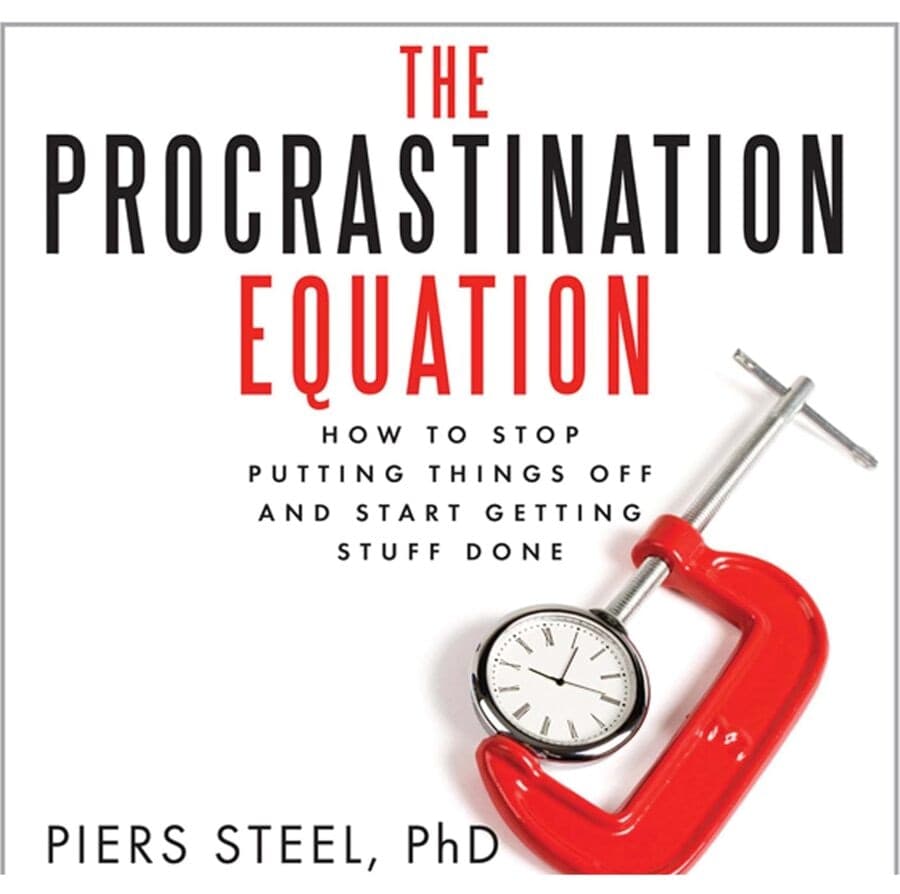
Steel even turned his work into an equation, made popular by his book The Procrastination Equation. Put simply, your drive to get started rises when you believe you will succeed and the task matters to you. It collapses when the reward is distant and distractions are close.
In the same meta-analysis, being anxious by nature has only a weak link with procrastination. What matters most is how the task makes you feel, and how much time separates you from its reward. Good news: you can change both.
Why is it worse when you work for yourself?
As an employee, you had deadlines set by others. A team meeting, a check-in with your manager, a colleague waiting for your part. Those small dates brought the reward closer.
On your own, the first deadline is often the client's. And the tasks that keep your business alive combine all four of Steel's causes.
| The task | How it makes you feel | What you do instead |
|---|---|---|
| Following up with a prospect | Fear of rejection | Tweaking your portfolio |
| Sending a quote | Fear of naming your price | Rereading the quote one more time |
| Declaring your turnover | Boredom, and fear of getting it wrong | Answering easy emails |
| Learning new skills | Effort with no immediate result | Watching videos "to learn" |
If the fear of not being good enough keeps showing up on your list, it may have a name. Our article on impostor syndrome when you are self-employed shows how it pushes you to put everything off, then do it all the night before.
For admin, at least, the dates exist, even if nobody reminds you. Our Getting started tool gives them to you in four questions, in order, with the deadlines, for a French micro-enterprise.
Add your home to the mix. Bed, fridge and phone are a few steps away, with no colleague to see your screen.
How do you get back to work when nobody is watching?
You won't change in a week, and that is not the goal. Each of the ideas below tackles one of the causes we saw above.
Start with two minutes
The hardest part is the first step, because that is what triggers the discomfort. Make it tiny. Open the follow-up email and type "Hello". Or open the spreadsheet and type the date.
Once you have started, the task is often less scary than it was in your head. And if you stop after two minutes, you have still moved forward.
Decide when and where, not just what
"I'll follow up with my prospects this week" commits you to nothing. "Tuesday at 9 am, before opening my emails, I send three follow-ups" does.
Psychologists call this an implementation intention, meaning a plan of the form "when X happens, I do Y". A meta-analysis by Peter Gollwitzer and Paschal Sheeran, in 2006, concludes that these plans clearly help people take action.
Work in short blocks
A task with no end is discouraging before you even begin. A 25-minute block, on the other hand, has a visible end.
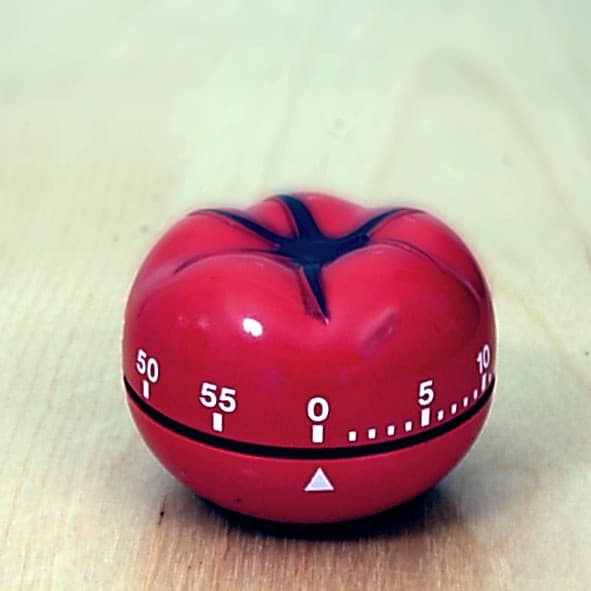
That is the idea behind the Pomodoro Technique, invented by Italian Francesco Cirillo with a tomato-shaped kitchen timer. Twenty-five minutes of work, five of rest, and start again.
During the block, your phone goes into another room. It sounds silly, but you are moving away the closest distraction of all.
Bring the reward closer
The client who will sign in two months doesn't motivate you today. Create closer deadlines. Give your client a delivery date, or set a time with a friend to show them your new offer.
A small reward right after the task works too. The coffee, the walk or the episode of your show comes after the follow-up, not before.
Forgive yourself for last time
It may sound soft, and yet! In 2010, Michael Wohl, Tim Pychyl and Shannon Bennett followed students between two exams.
According to their study, those who had forgiven themselves for procrastinating before the first exam procrastinated less before the second. Blaming yourself for last time adds discomfort, and you now know what discomfort makes you do.
If you put off almost everything, for a long time, and it comes with fatigue, anxiety or low mood, it is no longer a matter of organisation. Procrastination often goes hand in hand with anxiety or depression. Talk to your doctor.
To start, pick the task you have been putting off the longest and do two minutes of it before moving on to anything else. You'll see whether you keep going 😉
Frequently asked questions
Is procrastination just laziness?
No. Procrastinators are escaping an unpleasant emotion that the task triggers (boredom, anxiety, fear of failing), not the effort itself.
They are in fact often very busy, but with tasks that are easier than the one they are putting off.
Why do we procrastinate even on important tasks?
Because putting the task off makes the discomfort vanish right away, while its price is only paid later. That is what psychologists Fuschia Sirois and Tim Pychyl describe.
The more distant the reward and the more unpleasant the task, the more we put it off, according to Piers Steel's 2007 meta-analysis.
Why do we procrastinate more when self-employed?
Because nobody sets you a deadline before the client's. As an employee, meetings and colleagues brought the dates closer.
The tasks that keep a business alive (following up, sending a quote, declaring your turnover) are also often unpleasant, and their reward comes late.
How do you stop procrastinating when you work alone?
Start with two minutes, and decide in advance when and where you will do the task. These precise plans clearly help people take action, according to a 2006 meta-analysis.
Work in short blocks, bring the reward closer with nearer deadlines, and forgive yourself for last time.
Does forgiving yourself for procrastinating really help?
Yes, according to a 2010 study of students: those who had forgiven themselves before a first exam procrastinated less before the second.
Blaming yourself for your delays adds discomfort, and that discomfort is exactly what pushes you to put things off.