Would you like to practice JavaScript? Try building a random color generator! Let’s see in this article how to successfully complete this project.
Step 1
Let's start with our HTML code.
<div class="main">
  <div id="code">#000000</div>
  <button onclick="generateColor()">
    Generate
  </button>
</div>
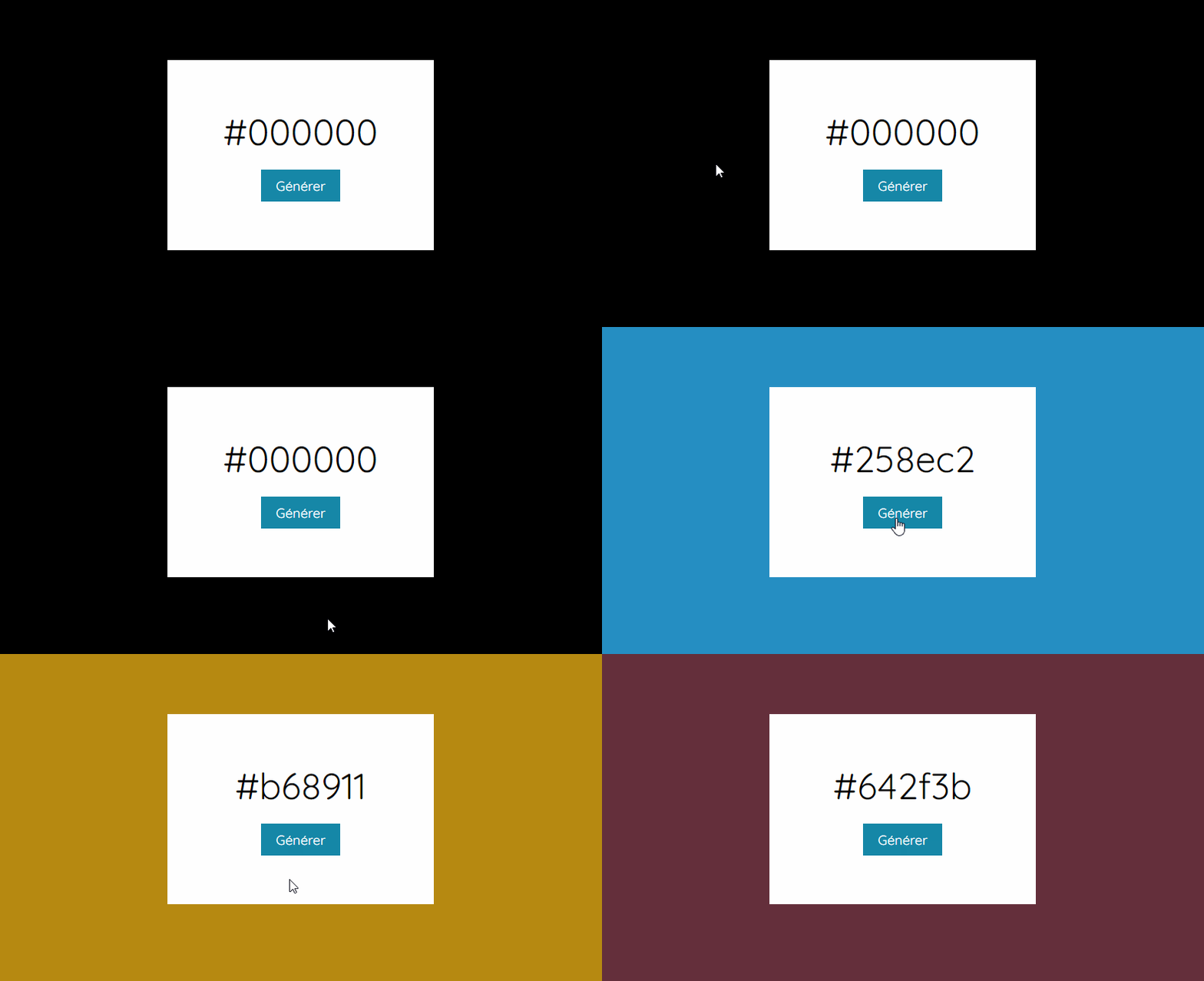
Here, we just need a button that calls a JavaScript function when clicked.
Step 2
Let's center our element in the middle of the page.
body {
    background: #000000;
    display: flex;
    align-items: center;
    justify-content: center;
    height: 100vh;
}
We will use Flexbox to center the box that will allow us to generate a color.
Step 3
Now, let's take care of the box and the code class!
.main {
    width: 350px;
    height: 250px;
    background: white;
    display: flex;
    justify-content: center;
    align-items: center;
    flex-direction: column;
}

#code {
    font-size: 3rem;
    margin-bottom: 20px;
}
Step 4
Let's finish our design by styling the button.
.main button {
    padding: 10px 20px;
    font-size: 1.1rem;
    border: none;
    outline: none;
    cursor: pointer;
    background: #1687a7;
    color: white;
}
Step 5
All that's left is to create the generateColor() function.
const generateColor = () => {

    let randomColor = (Math.floor(Math.random()*0xFFFFFF)).toString(16);
    document.body.style.backgroundColor = "#" + randomColor;
    let text = document.querySelector('#code');
    text.innerText = "#" + randomColor;

}
To generate a random hexadecimal number, there is a ready-made formula. Simply generate a random number (between 0.0000... and 0.9999...) and multiply it by 0xFFFFFF, which is the largest possible number for a hexadecimal color.
We generally end up with a 6-digit number. All that's left is to round down this number (floor()) and convert it into a base 16 string (thus hexadecimal).
Finally, we just need to add this color.