You're looking for somewhere to host your site, and two columns have you hesitating. On one side, shared hosting at €2.99 excl. VAT a month. On the other, a VPS at €3.81 excl. VAT, with 4 GB of memory all to yourself.
For less than a euro's difference, why not take the more powerful one?
Because choosing between shared hosting and a VPS isn't about price. It's about who looks after the server.
For a brochure site, a WordPress site or a small online shop, go for shared hosting. A VPS makes sense when you know how to run a server, or when your project needs software that shared hosting won't allow.
So let's look at what really separates the two and what a VPS costs once you've paid for it. Then we'll see when it becomes the right choice, even if you're not a developer.
What's the difference between shared hosting and a VPS?
On shared hosting, your site shares a server with many other sites. The host takes care of everything running underneath your site, from the operating system to backups, including PHP updates and security. You upload your files and manage your email addresses from a control panel.
A VPS (virtual private server) is a slice of a physical machine, with memory and processing power reserved for you alone. You have full control over it. But it arrives empty, or nearly. Installing and maintaining what runs on it is up to you.
Think of the difference between a serviced building and an empty flat. In the building, someone changes the locks and fixes the boiler. In the flat, you can do what you like with the walls, but a broken boiler on a Sunday is your problem.
| Shared hosting | VPS | |
|---|---|---|
| Who updates the system and PHP | The host | You |
| What you can install | What the host offers (PHP, MySQL, WordPress) | Any software |
| Memory and processing power | Shared with other customers | Reserved for you |
| Email addresses | Included in the plan | Set up yourself or bought elsewhere |
| Skills required | Using a control panel | Running a Linux server from the command line |
Why does a VPS cost barely more than shared hosting?
Here's what four common plans cost on 21 October 2026, according to the hosts' own pages. All four are sold by French or European providers, in euros.
| Plan | Type | First-year price | Renewal price |
|---|---|---|---|
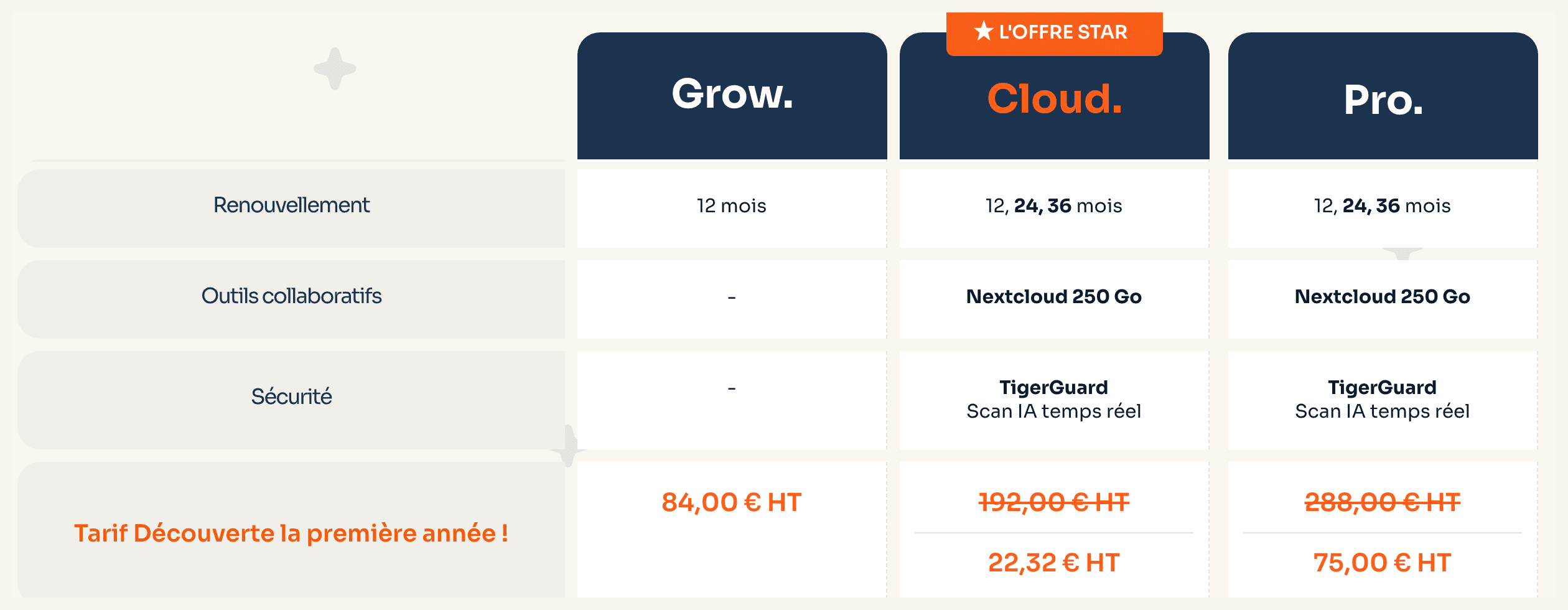
| o2switch Cloud | Shared | €22.32 excl. VAT for the year | €192 excl. VAT a year |
| OVHcloud Perso | Shared | €2.99 excl. VAT a month | €5.99 excl. VAT a month |
| Hostinger Premium | Shared | €2.49 a month, paying 48 months upfront | €9.99 a month |
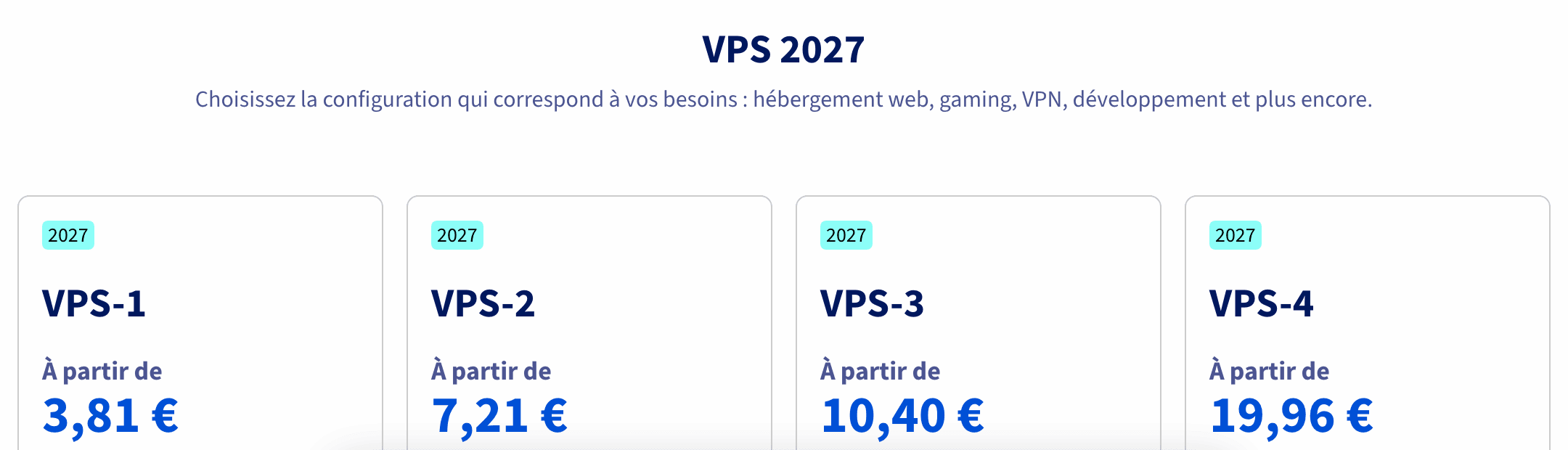
| OVHcloud VPS-1 | VPS | €3.81 excl. VAT a month | €3.81 excl. VAT a month |
On paper, the VPS wins. Yet its price only covers the machine. With shared hosting, you're also paying for the host's work: someone monitors the server, applies the fixes and answers when it goes down.
On a VPS, that work is yours. When a critical flaw hits PHP, like the October 2026 PHP vulnerability, nobody updates your server for you.
Always check the renewal price. At o2switch, the Cloud plan goes from €22.32 to €192 excl. VAT, 8.6 times more. At Hostinger, the month goes from €2.49 to €9.99, four times more. The first price tells you almost nothing about what you'll pay in the years that follow.
These prices are often shown excluding VAT. If you're not VAT-registered, like many French micro-entrepreneurs under the VAT exemption scheme, you can't reclaim the VAT.
So the price including VAT is what you really pay, which comes to €3.59 a month for OVHcloud's Perso plan.
Tempted by Hostinger? Go through our Hostinger partner link and add the code BELIEVEMY, which takes an extra 10% off the current promotions. Believemy earns a commission, at no extra cost to you. Still, pick your term with the renewal price in mind 😉
What does looking after a VPS involve?
A VPS isn't something you set up once and forget. Here's what falls to you, month after month:
- updates to the system, PHP and the database, as soon as a flaw is fixed;
- the firewall, which decides who's allowed to talk to your server;
- backups, and above all testing that you can restore them;
- the HTTPS certificate, which gives you the padlock in the address bar and needs renewing;
- email, if you want addresses on your own domain name.
None of this is hard if you're used to it. The real risk is that a server that works gets forgotten. It runs for months without a hitch, and nobody thinks about updates.
We know this first-hand. At Believemy, an old VPS was still running PHP 7.4.6, a 2020 version nobody was patching any more. It took a critical flaw for us to switch it off. 😬
The time you spend on it each month, plus the evenings when something breaks, has a price. Work out your day rate with our How much to charge tool, which is based on French rules. A single evening of repairs quickly costs more than the gap between the two plans.
When does a VPS become the right choice?
A VPS makes sense as soon as your project goes beyond what shared hosting can do. The most common cases:
- a Node.js or Python application, which most shared hosts can't keep running around the clock;
- a tool you host yourself, such as n8n for your automations, which has to stay on day and night;
- a specific piece of software no host offers, or a database other than MySQL;
- a site that slows down at peak times because it shares the server's memory with other customers.
The second case speaks to a lot of freelancers. If you want to run your automations without paying a usage-based subscription, our n8n course shows you how to build them.
Want the freedom of a VPS without the upkeep? Some hosts offer managed VPS plans, where they handle updates for you. They cost noticeably more, since you're paying for someone's work again.
What if your site needs neither?
A site made only of HTML pages, or one built with Next.js, doesn't need PHP. It can run on platforms like Vercel or Netlify, often for free at low traffic.
We compare these options in our article on the best free web hosting. And if putting a site online still feels fuzzy, our course on putting your site online starts from scratch.
For a brochure site or a WordPress site, shared hosting remains the simplest choice. Keep the VPS for the day a specific tool requires it, and pick your plan on its renewal price, not its promotion.
Frequently asked questions about shared hosting vs VPS
Is a VPS faster than shared hosting?
Often, yes, because a VPS's memory and processing power are reserved for you. On shared hosting, they're shared with the server's other customers.
For a small brochure site, the difference is rarely noticeable.
Do you need to know how to code to use a VPS?
Not necessarily to code, but you do need to know how to run a Linux server from the command line. That means installing software, applying updates and configuring a firewall.
On shared hosting, the host does this work and you only use a control panel.
Which hosting should you choose for a WordPress site when you work alone?
For a WordPress brochure site or a small shop, shared hosting is enough. The host keeps PHP and the server up to date for you.
Compare plans on their renewal price, which can be four to eight times higher than the first-year price.
How much does a VPS cost per month?
On 21 October 2026, OVHcloud's smallest VPS plan cost €3.81 excl. VAT a month, with 2 cores and 4 GB of memory.
On top of that price comes the time spent looking after the server, since updates, backups and security are up to you.