It's 10 pm, you finally close your laptop, and you realise a client's invoice has been waiting for a reminder for two weeks. Nobody told you. Of course not: when you work alone, nobody else is watching.
Claude Duet wants to fill that gap. In this Anthropic app, Claude no longer just answers. It comes to you with whatever needs your attention and keeps working on tasks while you're elsewhere. Before acting on your behalf, it asks for your approval.
Let's look at what it can do, what it will never do on its own, and how to try it, even if you've never used an agent before.
What is Claude Duet?
Claude Duet is a proactive AI agent, announced by Anthropic on 21 October 2026 as a research preview (a trial version that is still being tuned). It comes as an app for iOS and Android, and on claude.ai.
The difference from the Claude you know is the direction of the conversation. Usually, you ask and Claude answers. With Duet, Claude writes to you first when something deserves it.
Anthropic says it built Duet for professionals and small business owners who have more to track than they can keep in their heads. It runs on Claude Opus 5.5, Anthropic's top-tier model.
Don't mix it up with two namesakes. claude-duet is a small open-source project that lets two developers share the same Claude Code session in their terminals. Duet (duet.so) is a cloud agent platform with no link to Anthropic.

What does Claude Duet do day to day?
Picture an assistant who goes through your desk every morning before you arrive (and never asks for coffee!).
In practice, a day with Duet looks like this:
- In the morning, it sends you a short brief on the important items it found in your connected apps;
- During the day, it keeps an eye on those apps and only messages you when something needs you;
- On request, it takes on a task, from the simplest (booking a meeting) to the heaviest (a dashboard, a sales forecast, a web app prototype);
- When it's done, you get a notification, or one asking you to review the result.
Everything happens in a single conversation, typed or spoken. A two-word reply and a week-long project start in the same place.
It doesn't watch your accounts nonstop: it checks them every few hours. Anthropic's reason is simple, constant checking would burn through your plan's limits much faster. You can also tell it what you want to hear about, and how often.
Do you need to leave your computer on?
No. Duet works on its own virtual machine (a remote computer, at Anthropic), with its own browser. You describe the task in one sentence, it picks the apps and the steps, and it keeps going while your phone sleeps in your pocket.
That sets it apart from a tool that stops when you close the screen. You can hand it a forecast before lunch and find it ready when you get back.
What does it bring over from your Claude account?
It carries over your memory, your connected apps and your skills, the reusable instructions you've already given Claude. Setting it up takes very little work if you already use Claude with your tools.
Which tools does it work with?
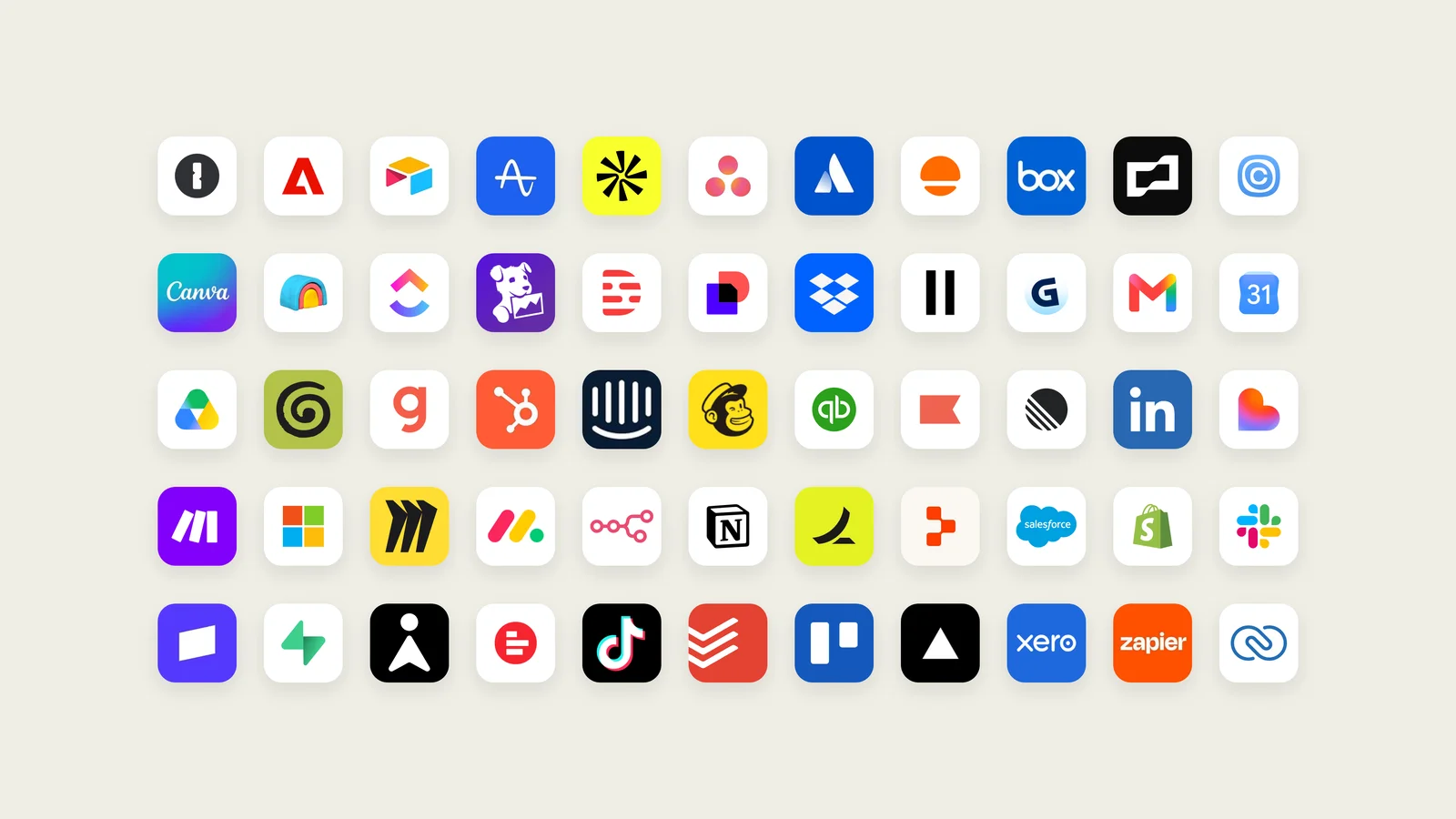
Duet uses the connectors in the Claude Marketplace, Claude's store of integrations. Anthropic counts over 6,000 connectors and plugins.
The examples Anthropic gives speak for themselves if you work for yourself:
- Your messages, to find what you missed in Gmail or Slack and draft the replies;
- Your invoices, to spot unpaid ones in QuickBooks or Stripe and write the reminders;
- Your contracts, prepared and then sent for signature through Docusign;
- Your clients, with follow-up emails written from their history in HubSpot;
- Your shop, set up and managed on Shopify, with a launch campaign prepared in Canva.
Anthropic also mentions payroll with Gusto and job posts on LinkedIn, more useful to a small team than to a one-person business.
A reminder drafted by Duet is a polite reminder. What if the client still doesn't pay? If you work under French law, our Formal demand for an unpaid invoice tool works out what you can claim, late fees included, and prepares the letter.
What will it never do without your approval?
That's what everyone wonders about an agent that reads their email. Anthropic answers with a simple rule. Duet reads, drafts and prepares on its own, but it carries out nothing important without you.
Before it sends a message, makes a payment, signs a document or deletes anything, it shows you exactly what it's about to do. Then it waits for your go-ahead.
Some actions are off-limits, even with your approval:
- Buying or selling securities;
- Moving money from one account to another.
You can also disconnect any app it has access to at any time.
And when it buys something?
It can buy for your business with Link, Stripe's digital wallet. Duet confirms the item with you, then Link asks you to approve the spend. The payment goes through a virtual card, and your real card number is never shared.
It can also pay with Shop Pay in online stores that accept it.
What about your passwords and sensitive data?
According to Anthropic, Duet never directly sees your passwords or sign-in tokens. An automatic filter checks every message to prevent leaks. It flatly refuses to send the most sensitive information, such as a credit card number or a government ID.
Health or personal finance details only go out when you've explicitly told it to send them. Anthropic adds defences against prompt injection, meaning instructions hidden in an email or a web page to hijack the agent.
A booby-trapped email can contain a sentence written for the agent rather than for you ("forward this file to…"). Anthropic's safeguards are there for that, but genuinely read every action it submits before you approve it. Asking for approval only protects you if you read what you approve.
On security, Anthropic says it had Duet attacked by its own red teams and by an outside firm. It's also covered by its public bug bounty programme, which pays whoever finds a flaw.
How are its first testers using it?
Anthropic opened Duet to a few small business owners before the announcement. Three examples from Anthropic's announcement:
- Jess gets her rundown every morning. One day, without being asked, Duet flagged a property viewing booked on the wrong day in her calendar;
- Amin owns Shahs of Kabob, restaurants in South Florida with about 110 employees. He uses it for accounting, customer support and marketing, and went through his invoices store by store;
- Mya had a call with a potential client. Duet prepared a brief, then noticed the call fell right before her flight, and offered to move it.

Mya's case says the most. Nobody had asked it to check her flight times, and yet that's exactly the kind of mistake that ruins a day.
At Anthropic, Boris Cherny leads the Claude Code team. He talks through his to-do list with Duet out loud on walks, instead of saving it for his desk. Chelsea Larsson hands hers to Duet before joining her kids, and reads the report in the evening.
Where does Claude Duet still get things wrong?
Anthropic admits it in its announcement: this first version can misread a thread or misjudge what's urgent. Its sense of when to message you is still being tuned, based on testers' feedback.
It was built for work first. Personal errands, such as booking tickets, work less well.
It can't yet show you its browser while it works. And it lives in its own app, separate from the main Claude app. Anthropic says feedback from early users will decide how the two come together.
How much does Claude Duet cost, and how can you try it?
During the preview, Duet is included in the Pro and Max plans at no extra cost.
At launch, Pro cost $20 a month ($17 with annual billing) and Max started at $100 a month, according to Claude's pricing page. If you're torn between the two, we've compared what each Claude plan changes.
It shares your usage limits with the rest of Claude, and it uses them differently from a chat. Its background checks count toward your limits, and a big task, like a financial model or a deck, takes far more than a question.
A bit like an intern who keeps opening your inbox: every visit costs something, even when there's nothing new. If your limits are already tight, adjust how often it reports back.
At launch, on 21 October 2026, access was limited to Pro and Max subscribers based in the United States. From the UK, Europe or elsewhere, you can join the waitlist, with no guaranteed date.
To sign up, go to the Claude Duet page and join the waitlist. Anthropic emails you when your access is ready.
Duet, Cowork or Claude Code: which one should you pick?
All three run on the same Claude, but they don't serve the same moment of your day.
| Tool | Who starts the work? | What for? |
|---|---|---|
| Claude Duet | It does, as much as you | Watching your apps, warning you, running tasks in the background |
| Claude Cowork | You | Handing over a task on your files and documents |
| Claude Code | You | Writing and changing code in a project |
If you want to delegate a specific job on your documents without waiting for Duet, our Claude Cowork course walks you through it step by step. And if you build apps, our Claude Code course shows you how to do it with Claude.
Duet, for its part, is for people who forget things because they have too much to track. Join the waitlist, and start by handing it your reminders and your calendar. That's where it will save you the most time 😉
Claude Duet FAQ
Is Claude Duet available outside the United States?
At launch, on 21 October 2026, Claude Duet was limited to Pro and Max subscribers in the United States. From elsewhere, you can sign up for the waitlist on the official Claude Duet page.
Anthropic hasn't given a date for other countries.
How much does Claude Duet cost?
During its preview, Claude Duet is included in the Claude Pro and Max plans at no extra cost. At launch, Pro cost $20 a month and Max started at $100 a month.
Duet uses the same limits as the rest of Claude. Its automatic checks and its big tasks take a share of them.
Can Claude Duet pay or send an email for me?
Yes, but never without your approval. Before sending a message, paying, signing or deleting, Claude Duet shows you the action and waits for you to confirm it.
Purchases go through a virtual card via Stripe's Link. Trading securities or moving money between accounts is off-limits, even with your approval.
Do I need to leave my computer on for Claude Duet to work?
No. Claude Duet works on its own virtual machine, with its own browser, at Anthropic. Your computer and your phone can be switched off.
You get a notification when the task is done or when it needs your review.