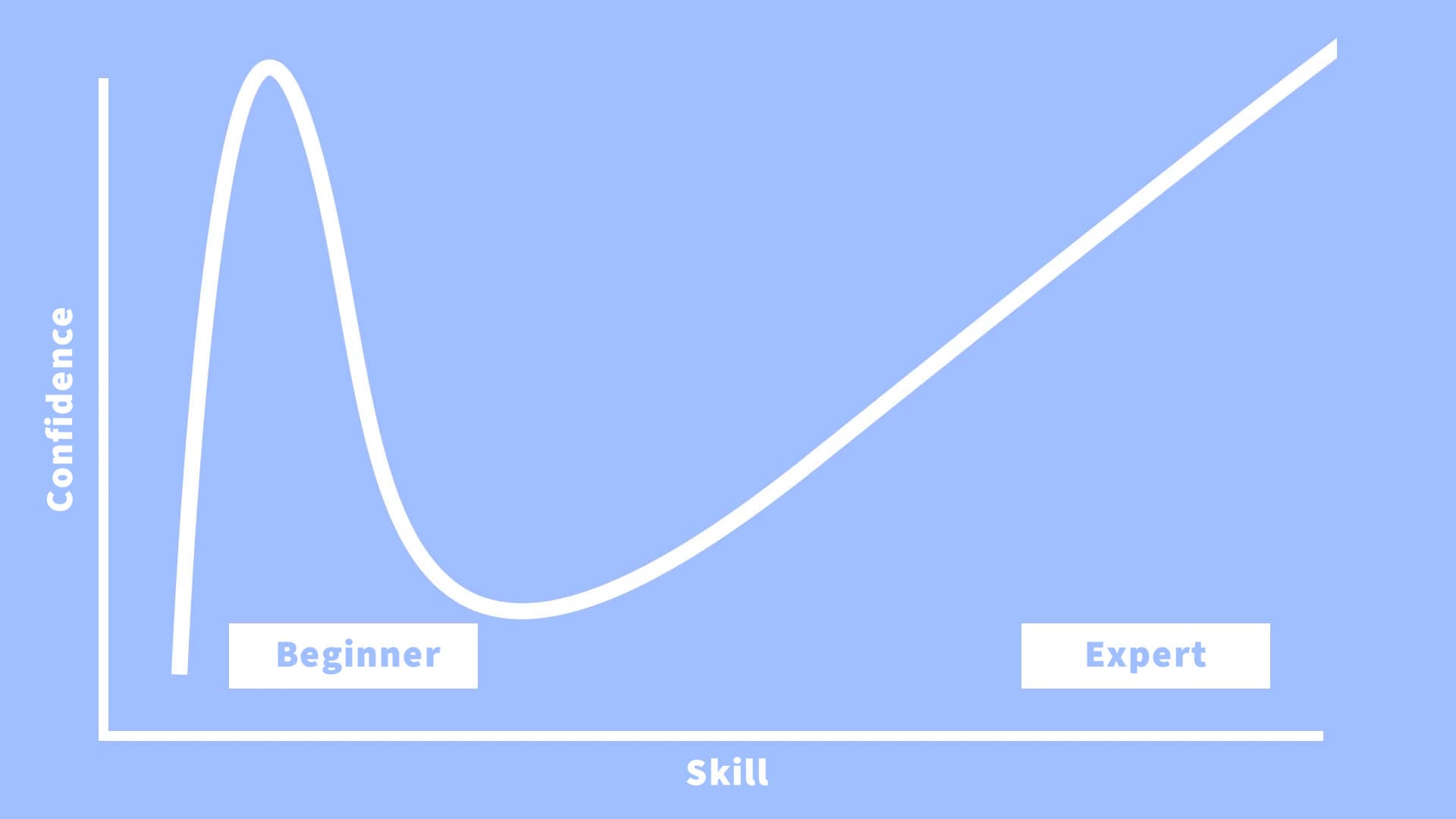
Last month, you went through an entire course. You took notes, understood everything, ticked every box.
Then a client asks you a specific question on the topic. And nothing. "But I covered all of it!"
You have just met the forgetting curve. It describes how fast we forget what we learn. Very quickly at first, then more and more slowly. The good news is that every review done at the right moment slows it down.
Let's look at where this curve comes from and what its numbers really mean. Then, how to retain what you learn when you teach yourself, even with little time.
What is the forgetting curve?
It comes from a German psychologist, Hermann Ebbinghaus. In the 1880s, he did something rather wild: he used himself as a guinea pig for years.
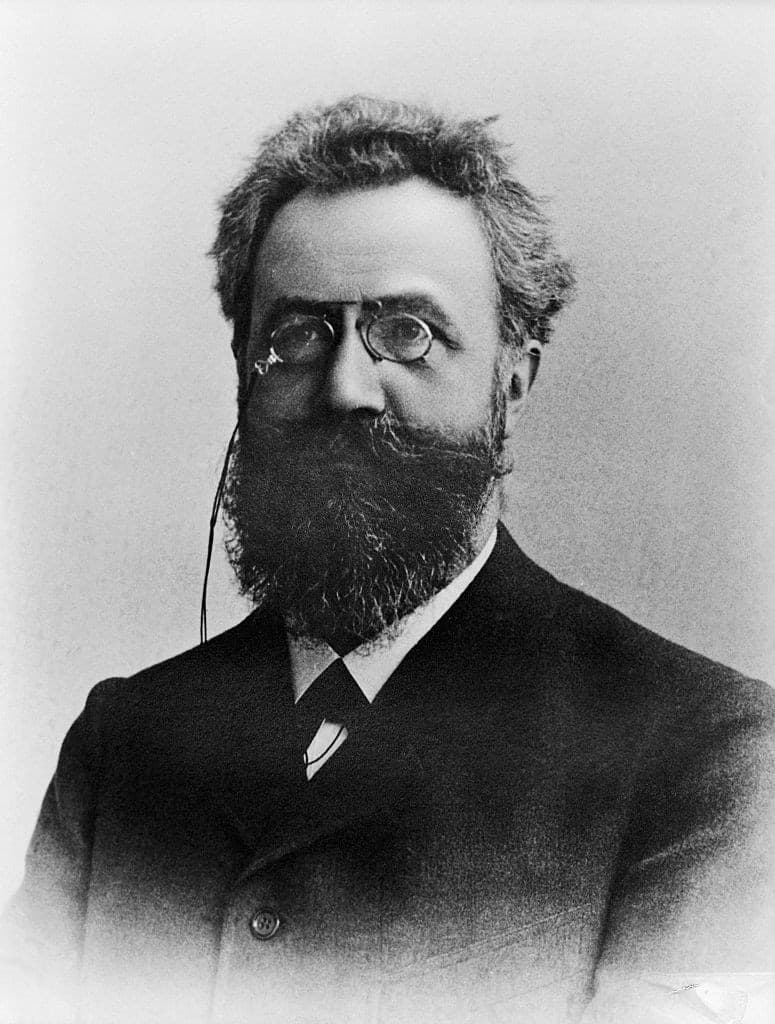
He memorised lists of made-up syllables with no meaning at all, so that nothing would help him remember them. Then he relearned them after 20 minutes, an hour, a day or a month, timing everything.
The longer it took him to relearn a list, the more of it he had forgotten. He published his results in 1885, and the curve they draw bears his name.
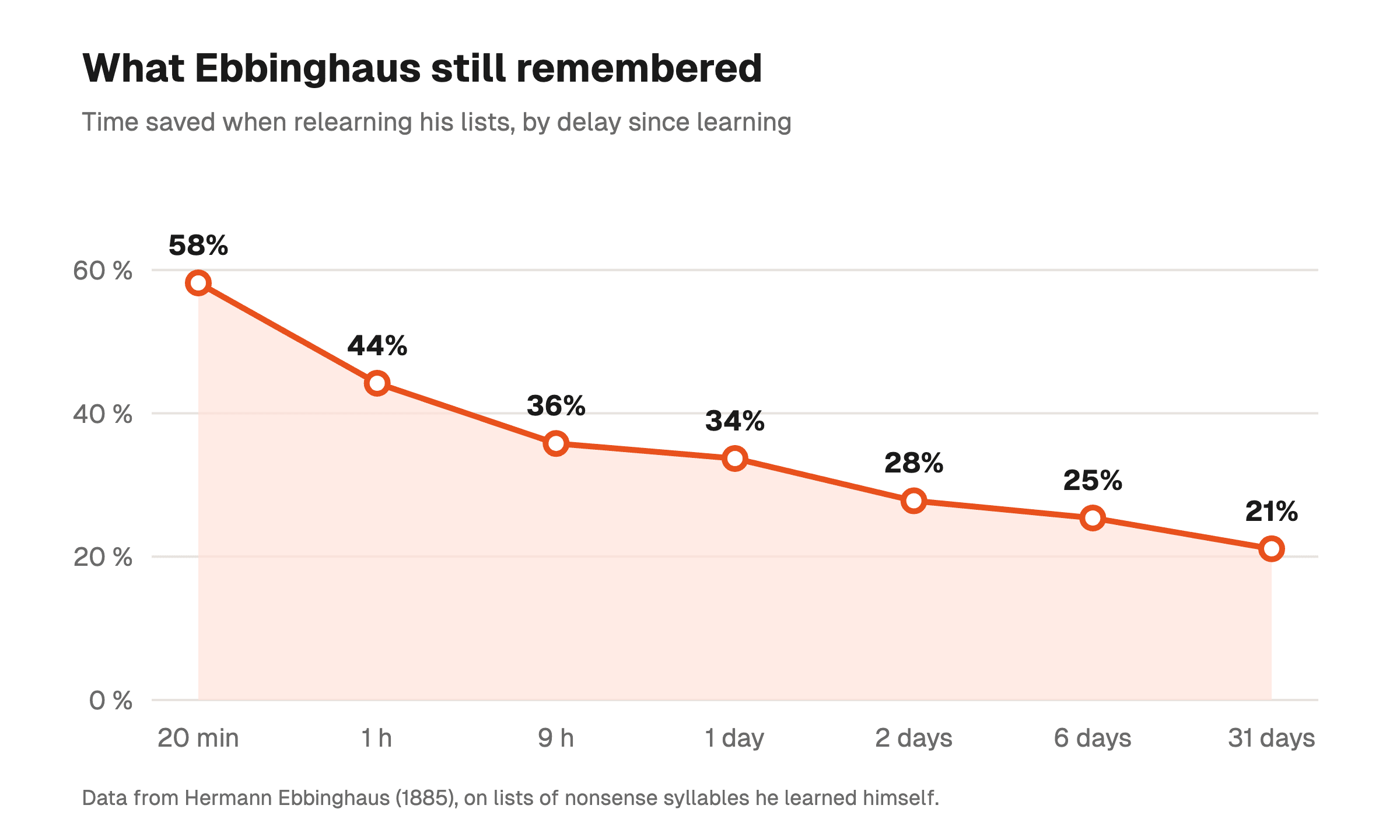
Twenty minutes after learning a list, he relearned it while saving 58% of his time. After one day, he saved only 34%, and 21% after a month. Most of the forgetting happens in the first few hours. After that, the slope flattens.
You will often read that we forget 70% of what we learn within 24 hours. That figure distorts Ebbinghaus. His percentages measure the time saved when relearning, not the share of what he remembered. And he worked with meaningless syllables, which are easier to forget than what you learn for your job.
The curve itself holds up. In 2015, two researchers from the University of Amsterdam, Jaap Murre and Joeri Dros, repeated the experiment over 70 hours. Their curve has the same shape as the one from 1885.
Why do we forget so fast?
A piece of knowledge is like a path through tall grass. If nobody walks it, the grass grows back. If you walk it several times, the path deepens and can be seen from afar.
Ebbinghaus chose meaningless syllables precisely because meaning helps you remember. What you connect to what you already know fades more slowly than what floats on its own.
Murre and Dros also noticed a small rise in the curve around 24 hours. Some researchers attribute it to sleep, which may help store what was learned during the day.
Personally, I once took a whole course on VAT between European countries. Three months later, facing my first invoice abroad, I had to start all over again 🥲
How do you slow down the forgetting curve?
Memory research has come a long way since Ebbinghaus. Two habits stand out clearly, and a third saves you from having to think about it.
Test yourself instead of rereading
Rereading your notes gives you the feeling that you know. The text looks familiar, so you think you have it. Testing yourself forces you to fetch the information, and that effort is what makes it stick.
In 2006, Henry Roediger and Jeffrey Karpicke measured it with 120 students. After reading a text, some reread it, while others tried to write it down from memory.
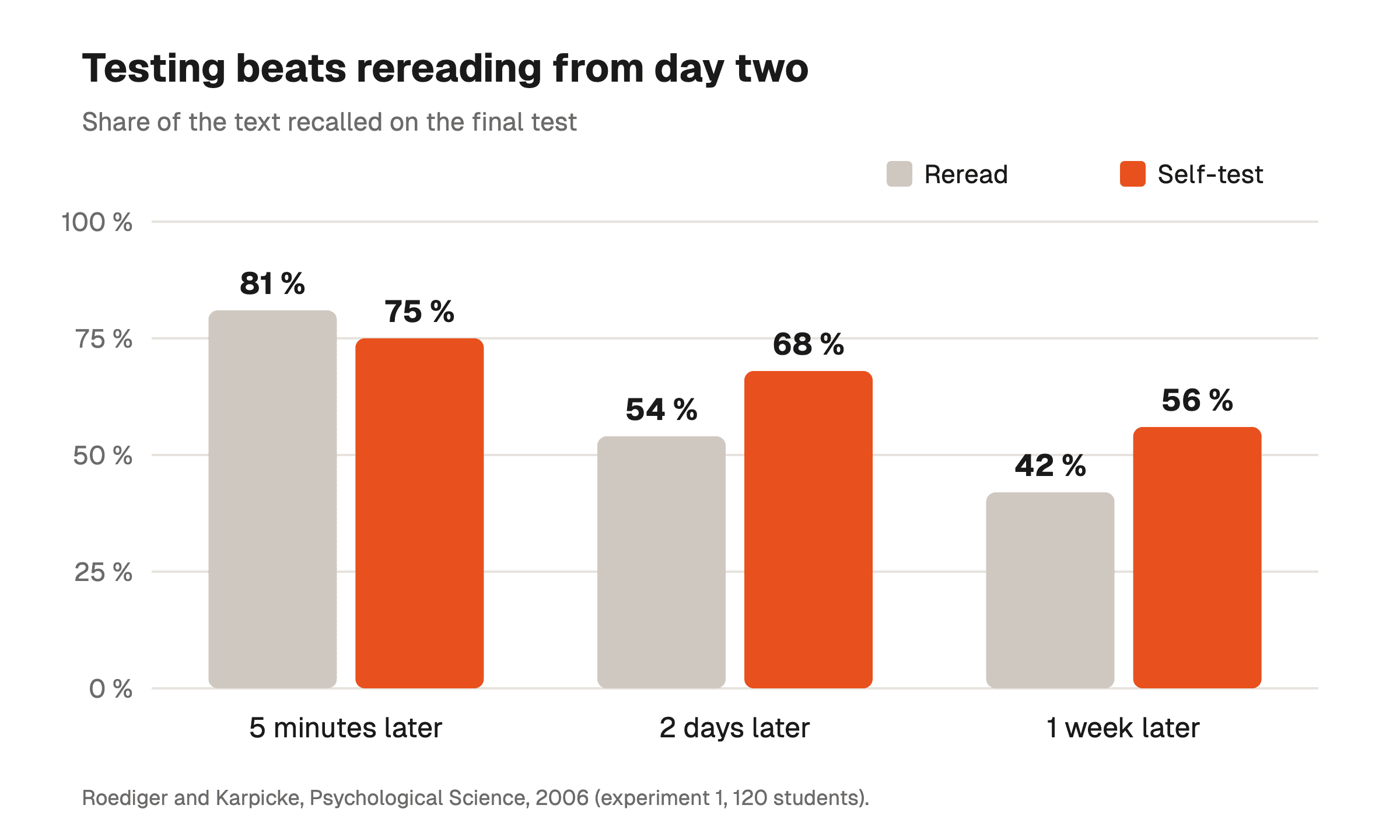
Five minutes later, rereading still won. But a week later, those who had tested themselves recalled 56% of the text, against 42% for those who had reread it.
The most striking part comes from their second experiment. Students who had reread four times said they were the most confident of remembering the text. A week later, they recalled 40% of it, against 61% for those who had tested themselves three times!
Space out your reviews
Reviewing three times in one evening helps less than reviewing three times over three weeks. A 2006 meta-analysis covering 317 experiments confirms it. It also shows that the longer you want to remember, the more you should space your reviews.
A team led by Harold Pashler offers a rule of thumb: place a review at about 10 to 20% of the time until you will need the information. To use it in a month, review around day three to day six.
Let an app work out the dates
Nobody wants to keep a review calendar by hand. Flashcard apps do it for you, and the best known is Anki.
You write a question on one side of the card and the answer on the other. After each answer, you say whether it was easy or not, and Anki decides when to show it again.

A missed card comes back in ten minutes. A card answered effortlessly waits several days, then weeks. You only review what you are about to forget.
Use what you learn, quickly
When you work for yourself, the best test is often a real job. Apply today's idea to a client, your website or your next invoice, within the week.
No job at hand? Ask an AI to quiz you on your course without giving you the answers. Our article on learning with AI without getting worse shows how to make it work that way.
To start, close this article and try to write down its three main ideas without rereading it. You have just taken your first test 😉
Frequently asked questions
What is Ebbinghaus' forgetting curve?
It is the curve that describes how fast we forget what we have learned. German psychologist Hermann Ebbinghaus measured it on himself and published it in 1885.
Forgetting is fast in the first hours, then it slows down. A replication of his experiment, published in 2015, found the same shape.
How much do we forget after 24 hours?
There is no figure that applies to everything. For Ebbinghaus, relearning a list after one day saved him only 34% of his time, against 58% after 20 minutes.
The "70% forgotten in 24 hours" that circulates distorts these measurements, which were made on meaningless syllables.
When should you review so you don't forget?
The next day, then at longer and longer intervals. A 2006 meta-analysis of 317 experiments shows that the longer you want to remember, the more you should space your reviews.
A rule of thumb from Harold Pashler: review at about 10 to 20% of the time until you will need the information.
Is rereading your notes effective?
Less than testing yourself. In Roediger and Karpicke's 2006 study, those who had tested themselves recalled 56% of a text a week later, against 42% for those who had reread it.
Rereading mostly gives you the feeling that you know, because the text looks familiar.
What is spaced repetition?
It is a method of reviewing an idea just before you forget it, at longer and longer intervals.
Flashcard apps such as Anki work out these dates for you, based on how easily you answer.